Do You Need a Permit to Photograph in Midtown Manhattan?
Midtown Manhattan is one of New York City’s busiest places to photograph, but a simple street shoot can quickly become confusing once tripods, models, lighting, commercial clients, transit property, or managed locations enter the picture. A tourist taking photos with a phone on a public sidewalk is very different from a fashion crew setting up lights near Grand Central Terminal. In general, casual photography with a handheld camera, mobile phone, or even a camera on a tripod does not automatically require a NYC Film Office permit on qualifying City property, as long as the photographer is not claiming exclusive use of the space, using certain restricted props or activities, or requesting production-vehicle parking privileges. The exact location still matters because Grand Central Terminal, the subway system, Bryant Park, and privately controlled properties can follow separate rules.
Do You Need a Photography Permit in Midtown Manhattan?
There is no single permit rule that covers every photo shoot in Midtown Manhattan. The right answer depends on where you are standing, what equipment you bring, whether normal pedestrian access remains open, and who controls the property. This distinction is important because a public sidewalk under City rules can be treated differently from an MTA station, Grand Central Terminal, Bryant Park, or a privately managed plaza. A small portrait session using a handheld camera may create little or no permitting issue on ordinary City property, while the same photographer carrying tripods and lighting equipment into an MTA-controlled station may need prior approval.
| Photography situation | General permit direction |
| Tourist taking photos with a mobile phone | Usually no MOME permit on qualifying City property |
| Street photographer using a handheld camera | Usually no MOME permit |
| Camera on a single tripod on qualifying City property | Tripod alone does not automatically require a MOME permit |
| Shoot using additional production equipment | Permit requirements should be checked |
| Shoot reserving or controlling public space | MOME permit may be required |
| Production requesting special vehicle parking | MOME permit required |
| Photography in an NYC subway station | MTA rules apply |
| Professional-equipment shoot inside Grand Central | MTA/Grand Central permission is required |
| Organized shoot in Bryant Park | Bryant Park permit is required |
| Photography on private property | Property owner’s rules apply |
The safest way to think about photography permits in Midtown is:
location + equipment + effect on public access + intended use = the permit decision.
When You Usually Do Not Need a NYC Film Permit
Many people photographing Midtown do not need a Film Office permit at all. The NYC Mayor’s Office of Media and Entertainment, commonly called MOME, states that permits are generally unnecessary for casual photographers, tourists, and credentialed members of the media. MOME also allows qualifying activity with a handheld camera, a camera on a tripod, handheld props, and handheld equipment when the photographer does not assert exclusive use of City property, use restricted production elements, or request production-vehicle parking privileges. This is why ordinary Midtown street photography should not be treated the same way as a full commercial production.
Casual, Tourist, and Street Photography
Someone walking through Midtown Manhattan with a smartphone, DSLR, or mirrorless camera can generally photograph streets, architecture, pedestrians, and city scenes from qualifying public areas without applying for a MOME film permit. This covers many forms of tourist photography, personal photography, documentary-style street photography, and low-impact portrait work. The key is that the photographer remains part of normal public activity instead of taking control of the sidewalk or turning the space into a production set. MOME specifically says that simply standing on a City sidewalk, City bridge walkway, or qualifying City park area with a handheld camera does not by itself require a film permit when exclusive use is not being asserted.
A street photographer should still keep entrances, pedestrian pathways, curb areas, and busy walking routes clear. Midtown sidewalks can become crowded quickly, especially around Times Square, Fifth Avenue, Penn Station, Bryant Park, and major office buildings. Even if the camera itself does not trigger a permit, the way a shoot occupies public space can change the situation.
Using a Camera and Tripod on City Property
One of the most common misunderstandings is that placing a camera on a tripod automatically means you need a photography permit in NYC. Under MOME’s general rules for qualifying City property, that is incorrect. MOME expressly includes a camera on a tripod within the basic equipment that can be used without a Film Office permit when the remaining conditions are satisfied.
That does not mean a tripod can be used anywhere in Midtown without checking. Property jurisdiction still controls the answer. MTA rules, for example, treat tripods as ancillary equipment and require approval in situations where ordinary personal handheld photography would not require it. Grand Central Terminal also applies its own professional-equipment rules.
When a Film or Photography Permit May Be Required
A photography setup becomes more likely to require a permit when it starts functioning like an organized production rather than a person simply taking pictures. MOME identifies several permit-triggering factors, including production equipment packages, certain production vehicles requesting parking privileges, exclusive use of City property, prop weapons or vehicles, police uniforms, stunts, and productions requiring NYPD or FDNY assistance. Insurance is required for activity that falls within MOME’s permit-required category.
Additional Production Equipment
MOME draws an important line between a basic camera setup and an equipment package. For its permit rules, equipment means more than a handheld camera, camera on a tripod, or qualifying handheld items such as a handheld bounce board or boom microphone.
A photographer planning a Midtown shoot should therefore review the full setup if it includes items such as:
- freestanding light stands;
- large reflectors;
- lighting systems;
- equipment carts;
- cables running through a pedestrian area;
- dollies;
- camera tracks;
- generators;
- multiple pieces of grip equipment;
- a larger production staging area.
These items should not be treated as an automatic universal permit trigger in every location. The important point is that a larger production footprint can move the shoot outside the basic permit-exempt activity described by MOME, while property operators such as the MTA may apply their own equipment standards.
Exclusive Use, Obstruction, and Public Access
Equipment is only part of the issue. How the crew uses the public space can matter just as much. MOME’s rules distinguish normal use of public property from exclusive use, meaning the crew physically, verbally, or otherwise claims part of the City sidewalk, bridge walkway, or park pathway solely for the production.
For example, a photographer standing near the edge of a wide sidewalk while people continue passing normally is very different from a crew asking pedestrians to stop while a model crosses the frame. Reserving a section of walkway, placing equipment across a pedestrian path, repeatedly holding foot traffic, or creating a controlled shooting zone can change the permit analysis.
MOME’s optional Letter in Lieu criteria also provide a useful practical measure for pedestrian access. For qualifying activity, at least eight feet must remain open on a City sidewalk or pathway that is 16 feet wide or less; where the total width is greater than 16 feet, at least half of the width must remain available for pedestrians.
Production Vehicles, Special Props, Stunts, and Agency Assistance
A full production can introduce issues that a normal portrait or street shoot does not. Under MOME’s current guidance, permit-required situations can include production vehicles requesting parking privileges, prop weapons, prop vehicles, actors dressed in police uniforms, stunts, and shoots requiring NYPD or FDNY assistance.
If a project reaches that level, photographers and producers should treat it as formal production planning rather than assuming the rules for a handheld camera still apply. A fashion campaign involving several models and a photographer can still be relatively compact; adding equipment staging, production parking, special effects, restricted props, or control of City property creates a very different operational footprint.
Does Commercial Photography Automatically Require a NYC Permit?
Being paid to photograph something does not by itself mean that every shoot automatically requires a MOME permit. This is an important distinction for commercial photographers, fashion teams, portrait photographers, brands, and content creators working in Midtown. MOME’s public guidance focuses on factors such as equipment, production vehicles, exclusive use of City property, restricted props or stunts, and agency assistance.
Commercial Intent vs. Production Impact on City Property
Consider two photographers working on an ordinary City-controlled sidewalk. One photographer is shooting personal street photography with a handheld mirrorless camera. Another has been hired to photograph a model but is also using only a compact handheld setup without controlling public space. The second shoot may be commercial in purpose, but commercial intent alone is not presented by MOME as an automatic permit trigger under its general City-property rules. The production’s equipment, location, use of the property, and other operational factors still matter.
This is why statements such as “all professional photography requires a NYC permit” are too broad. The responsible authority and the exact circumstances must be identified first.
Why Commercial Use Matters More at Some Midtown Locations
Commercial use becomes much more important once the shoot moves onto property controlled by an authority with its own policy. MTA rules are a clear example. The MTA requires a location agreement or other permit for commercial filming and photography on MTA property. Its definition includes advertisements, commercial promotions, motion pictures, television productions, and sponsored social media content. Sponsored influencer posts and paid partnerships can therefore fall within the MTA’s commercial category. MTA also says wedding or engagement photography can be considered commercial when the photographer, videographer, or event planner later uses the images on a website or social media account to promote the business. The lesson is simple: commercial photography does not have one permit rule across all of Midtown Manhattan.
Photography Rules at Major Midtown Manhattan Locations
Midtown contains City sidewalks, transit property, managed parks, private buildings, landmarks, plazas, and commercial developments within a relatively small area. Two shooting locations that appear to be only a few blocks apart may answer to different authorities. Photographers should therefore identify the exact property before applying general NYC photography rules.
Grand Central Terminal
Grand Central Terminal follows MTA and Metro-North rules rather than ordinary City sidewalk rules. Small personal photography with a handheld consumer camera is different from an organized shoot using professional equipment. Grand Central provides a specific permit process for small, self-contained film and photography productions, while larger productions are handled under the broader MTA filming process.
Professional equipment such as tripods, lights, or stabilizers can trigger the need for authorization, and commercial use has separate requirements.
So, can you take photos inside Grand Central? Yes, ordinary personal handheld photography is generally treated differently from a professional or commercial production. Once professional equipment or commercial use is involved, check the current Grand Central/MTA permit requirements before shooting.
NYC Subway Stations and Trains
Personal, non-commercial photography on MTA property can usually be done with a mobile phone or small handheld camera without prior registration or a fee, provided the activity is safe and does not interfere with transit operations or passengers. The rules change once ancillary equipment or a more disruptive production enters the station.
MTA specifically identifies tripods, lights, reflectors, carts, cables, and multiple cameras as equipment that may require approval. Larger groups, significant props, dancing, gymnastics, or other activity that could affect transit customers can also trigger additional requirements.
Commercial photography has another layer. Even a commercial production using only one handheld camera must work with the MTA for the required location agreement or permit. Sponsored Instagram, TikTok, and other paid-partnership content are also treated as commercial activity under MTA policy.
Bryant Park
Bryant Park is a good example of why photographers should not assume that every outdoor Midtown location works like an ordinary public sidewalk. Bryant Park Corporation states that a Bryant Park permit is required for shoots throughout the park, including its stairs, entrances, surrounding sidewalks on Fifth Avenue, Sixth Avenue, 40th Street and 42nd Street, and the terrace in front of the New York Public Library.
The park considers the type of shoot, duration, crew size, amount of equipment, setup complexity, location, and amount of space used when determining site fees. Wedding photography currently carries no site fee, but Bryant Park still requires a permit. Generators are also prohibited in the park, with electrical needs requiring advance coordination.
If the New York Public Library facade, marble steps, or famous lions are included in the planned shot, Bryant Park directs productions to obtain separate permission from the library.
Times Square, Fifth Avenue, and Ordinary Midtown Streets
Street photography around Times Square or Fifth Avenue cannot be reduced to a rule such as “Times Square requires a photography permit.” Instead, photographers should determine the exact place from which they are shooting. An ordinary City sidewalk may fall within MOME’s general rules, while a privately managed plaza, building entrance, event area, or other controlled space may have separate conditions.
For a basic shoot, ask four practical questions: Is this ordinary City-controlled public property? Is the camera setup handheld or otherwise within MOME’s basic permit-exempt category? Can pedestrian traffic continue normally? Is any private or separately managed property being used? If all activity stays low-impact on qualifying City property, the general MOME rules may be enough. If the crew starts staging equipment or controlling space, the permit question changes.
Rockefeller Center and Other Privately Controlled Locations
A property can be open to the public without being ordinary City-owned public property. Rockefeller Center, building interiors, commercial venues, and privately controlled plazas can establish their own rules for professional and commercial photography. A MOME permit does not give a photographer automatic permission to use private property, and MOME expressly states that its jurisdiction does not extend to private property or property controlled by other government entities such as the MTA or Port Authority.
For any organized shoot on private property, contact the property owner or manager before the production date. This is especially important for fashion campaigns, advertising photography, commercial portraits, branded content, and larger crews.
Public Property, Transit Property, and Private Property: Why the Difference Matters
One of the easiest ways to make a permit mistake is to focus on the camera instead of the property. MOME primarily addresses qualifying City-controlled property. The MTA controls its transit facilities. Bryant Park Corporation manages Bryant Park’s shoot process. Private owners control their own interiors and other private spaces. This means that “I don’t need a MOME permit” and “I don’t need permission” are not the same statement. MOME itself makes clear that its authority does not cover MTA property, Port Authority property, State or Federal property, or private property.
| Property type | Midtown examples | Authority to check |
| City-controlled public property | Qualifying sidewalks and public areas | MOME / applicable City rules |
| Transit property | Subway stations, trains, Grand Central | MTA / Metro-North |
| Managed public space | Bryant Park | Bryant Park Corporation |
| Private property | Studios, offices, venues, interiors | Property owner or manager |
| Other government property | Agency-controlled locations | Relevant agency |
Understanding this distinction before the shoot can prevent wasted applications, delays, and incorrect assumptions about where a permit is valid.
Who Issues Photography Permits and Permissions in Midtown Manhattan?
There is no single office responsible for every Midtown photography location. The correct authority depends on who owns or controls the space. For ordinary qualifying City property, the NYC Mayor’s Office of Media and Entertainment is central to the Film Office permit process. Transit locations generally fall under MTA requirements, while Bryant Park and private properties have their own processes.
NYC Mayor’s Office of Media and Entertainment
MOME’s Film Office handles permits for qualifying film and still-photography production activity on City property. Its guidance separates low-impact photography that does not need a permit from productions involving larger equipment packages, production parking, exclusive use, restricted props, stunts, or NYPD/FDNY assistance. Before applying, make sure MOME actually controls the permit issue for the location. Applying to the Film Office does not replace permission required from an MTA facility, private owner, or another property authority.
MTA and Location-Specific Authorities
The MTA handles photography and filming on its transit property, including the New York City Subway and Grand Central-related locations. Bryant Park Corporation handles photo and film applications for Bryant Park. Private building owners and venue operators set their own production policies. For photographers, the practical rule is to identify the property owner or operating authority before researching the permit form. That order avoids applying for the wrong permission.
What Is a Letter in Lieu of Permit?
MOME offers an optional Letter in Lieu of Permit for qualifying film or photography activity on exterior public property owned by the City when the project does not require a Film Office permit and is not taking place at the same location and time as another permitted production. The letter can give photographers documentation showing that their planned activity falls within the permit-exempt criteria, but carrying one is optional.
The letter is not a film permit, does not provide production parking privileges, and does not give permission to work on MTA, private, State, Federal, or other non-City property. MOME currently states that the letter is valid for 30 days.
This can be useful for a photographer running a simple exterior project who wants clear documentation without applying for a permit the activity does not require.
What to Do If Your Midtown Photo Shoot Requires Permission
If your shoot appears to need a permit, start with the location rather than immediately completing a MOME application. A well-prepared request should identify the exact shooting area, purpose of the photography, number of people involved, equipment, production vehicles, intended commercial use, and the date and time. These details help the property authority understand whether the shoot can proceed and what type of agreement is required.
A practical process is:
- Identify the property. Confirm whether the location is City property, MTA property, Bryant Park, or privately controlled.
- Define the production footprint. List cameras, tripods, lights, stands, carts, props, models, crew members, and vehicles.
- Check public impact. Determine whether the shoot will affect pedestrian movement, access, transit passengers, or normal property operations.
- Contact the responsible authority. Use MOME, MTA, Grand Central, Bryant Park Corporation, or the private property manager as applicable.
- Check insurance and fees. Larger or commercial productions may have insurance, location-fee, or licensing requirements.
- Apply early. Location approvals can take time, particularly when equipment, commercial use, or larger crews are involved.
Do not assume one permit covers every part of a shoot. A project moving between a City sidewalk, Grand Central, and a private interior may face three different sets of requirements.
Quick Permit Decision Guide for Midtown Photographers
A simple decision sequence can prevent most confusion. First ask where the camera will physically be located. If it is ordinary City-controlled exterior public property, check the MOME rules. If it is Grand Central, a subway station, Bryant Park, or private property, begin with that property’s policy instead. Then review your equipment, effect on public access, commercial purpose, and production activities.
Use this order:
- Where are you shooting?
City sidewalk → Check MOME conditions.
MTA property → Check MTA rules.
Bryant Park → Bryant Park permit rules apply.
Private property → Ask the property owner. - What are you bringing?
Handheld camera or qualifying basic setup → Lower permit impact.
Lights, stands, carts, cables, multiple cameras, or larger gear → Check further. - Are you controlling the space?
Normal pedestrian access remains open → Lower impact.
People need to stop or an area must be reserved → Permit review becomes more likely. - Is the activity commercial?
On MTA or private property, commercial use can directly change the permission requirement. - Are special production elements involved?
Production parking, certain props, stunts, police uniforms, or NYPD/FDNY assistance can trigger formal MOME requirements.
When a Midtown Photo Studio Is the Better Option
Outdoor Midtown photography can produce a look that a studio cannot copy, but a public location is not always the right production environment. Weather, crowds, pedestrian movement, equipment limits, changing daylight, sound, privacy, wardrobe needs, and location permissions can all affect a shoot. For a small street portrait, those issues may be manageable. For fashion, beauty, e-commerce, branded content, product photography, or a production with several people and lighting equipment, a dedicated studio can make the day much easier.
Outdoor Photography Works Well When You Need the Midtown Setting
Outdoor photography makes sense when the location itself is part of the image. Midtown streets can provide architecture, traffic, storefronts, taxis, signage, crowds, and an unmistakable New York City atmosphere. Street portraits, editorial images, travel photography, documentary work, and lightweight lifestyle shoots often benefit from that setting.
The strongest outdoor shoots usually keep the production compact. A photographer with a handheld camera, one subject, and minimal gear can move with pedestrian traffic instead of fighting it. Once the concept requires controlled lighting, repeated takes, wardrobe changes, props, a larger crew, or a fixed production area, the public location can become less practical.
A Studio Makes More Sense When You Need Control
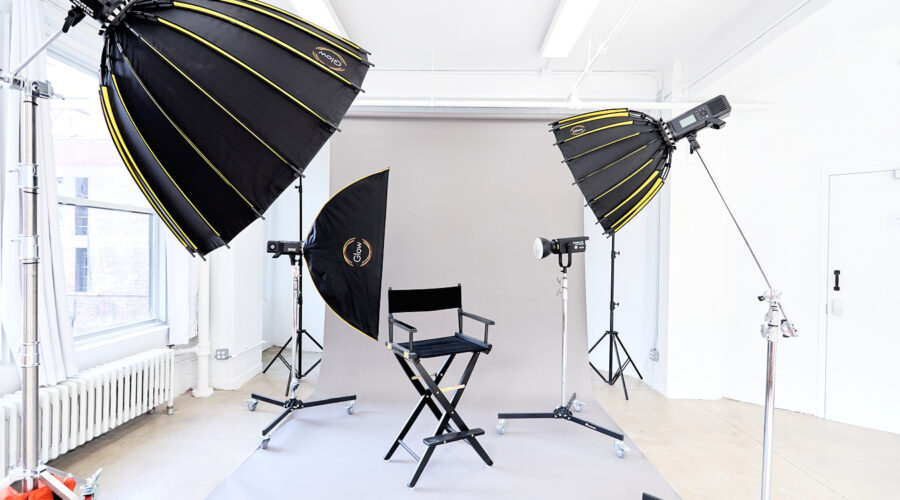
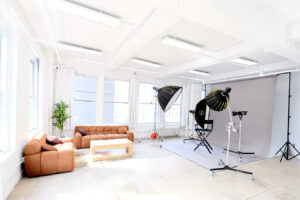
For shoots that need predictable lighting, privacy, space for a crew, wardrobe changes, backgrounds, grip equipment, product setups, or uninterrupted shooting time, a photo studio in Midtown Manhattan can be the simpler option. Love Studios NYC operates Midtown studio spaces that feature natural daylight, high ceilings, seamless paper options, private changing areas, and on-site lighting and grip rentals. The spaces are used for fashion photography, portraits, e-commerce, editorial work, product photography, and social media content.
A studio does not replace the value of a real Midtown street location; it solves a different production problem. For shoots that need predictable lighting, privacy, space for a crew, wardrobe changes, backgrounds, grip equipment, product setups, or uninterrupted shooting time, a photo studio in Midtown Manhattan can be the simpler option. If your creative idea depends on the streets, check the correct permit and property rules. If your priority is control over lighting, equipment, timing, privacy, and the working environment, booking a professional studio can remove many of the variables that come with shooting in busy public spaces.
Midtown Manhattan Photography Permit FAQs
Photography permit questions often become confusing because people apply one rule to every location. These answers focus on the distinctions that matter most for photographers working in Midtown Manhattan.
Do I Need a Permit for Street Photography in Midtown Manhattan?
Usually not for ordinary low-impact street photography on qualifying City-controlled public property. MOME states that casual photographers and tourists generally do not need a permit, and handheld cameras or cameras on tripods can qualify for permit-exempt activity when the other conditions are satisfied.
Can I Use a Tripod on a Public Sidewalk in NYC?
A tripod alone does not automatically create a MOME permit requirement on qualifying City property. MOME expressly includes a camera on a tripod within its basic permit-exempt equipment category. You must still avoid exclusive use and meet the other applicable conditions. Different rules can apply on MTA or privately controlled property.
Does Professional or Commercial Photography Always Require a NYC Permit?
No. Commercial intent alone is not presented by MOME as an automatic permit trigger for qualifying City property. Equipment, exclusive use, production parking, special activities, and property jurisdiction also matter. On MTA property, however, commercial photography requires an MTA location agreement or permit.
Can I Take Photos Inside Grand Central Terminal?
Personal handheld photography and a professional or commercial production are treated differently. If you plan to use professional equipment such as a tripod, light, or stabilizer, or use the imagery commercially, check Grand Central and MTA’s current permit requirements before the shoot.
Can I Take Photos in NYC Subway Stations?
Personal, non-commercial photography with a mobile phone or small handheld camera generally does not require prior MTA registration or a fee, provided the activity is safe and does not disrupt transit operations. Tripods, lights, reflectors, or other ancillary equipment can require MTA approval.
Do I Need Permission for a Photo Shoot in Bryant Park?
Yes. Bryant Park Corporation states that a permit is required for shoots throughout the park and several surrounding areas under its control. Wedding photography currently has no site fee, but a permit is still required.
Do Influencers Need a Photography Permit in Midtown Manhattan?
It depends on the property and whether the content is personal or sponsored. MTA considers sponsored social media and paid-partnership content commercial activity, which requires prior MTA permission when created on MTA property. A personal, non-commercial post made with a small handheld device is treated differently.
What Equipment Can Change an NYC Photography Permit Requirement?
Under MOME rules, an equipment package beyond a handheld camera, camera on a tripod, or qualifying handheld items can trigger permit requirements. On MTA property, tripods, lights, reflectors, carts, cables, and multiple cameras are specifically identified as ancillary equipment requiring additional review in relevant situations.
What Is the Difference Between a MOME Permit and Location Permission?
A MOME permit covers qualifying production activity within MOME’s jurisdiction. It does not grant permission to use MTA property, private property, Port Authority property, or State or Federal property. Those locations can require separate approval from the authority or owner that controls them.
What Is a Letter in Lieu of Permit?
A Letter in Lieu is optional documentation available from MOME for qualifying permit-exempt photography or filming on exterior City-owned public property. It confirms that the planned activity meets specified conditions, but it is not a Film Office permit and cannot be used as permission for MTA or private property.
Final Takeaway
You do not need to treat every Midtown Manhattan photo session like a major film production. For many casual, tourist, street, and low-impact shoots on qualifying City property, a MOME permit is unnecessary. What matters is identifying the exact location, understanding who controls it, reviewing the equipment and crew footprint, and making sure the shoot does not claim exclusive use or interfere with normal public access. Love Studios NYC operates Midtown studio spaces at 545 8th Avenue with features that include natural daylight, high ceilings, seamless paper options, private changing areas, and on-site lighting and grip rentals.
Grand Central Terminal, the NYC Subway, Bryant Park, and privately controlled Midtown locations require special attention because their rules can differ from ordinary City sidewalks. Check the property first, then the equipment and intended use. If your production needs lighting, backgrounds, privacy, wardrobe space, a larger crew, or a controlled working environment, a Midtown photo studio can also be a practical alternative to building a production setup in a crowded public location.