
Seamless Paper vs Fabric Backdrop: Which Is Better for Photography?
Choosing between a seamless paper vs fabric backdrop can seem like a small equipment decision, but the material you use affects setup time, wrinkles, image consistency, portability, maintenance, and the overall appearance of your photographs. A paper backdrop gives you a smooth, clean background with almost no visible texture, while fabric is easier to fold, transport, reuse, and adapt to different locations. The better option depends on how and where you shoot. For controlled studio portraits, product photography, e-commerce, and commercial work, seamless paper is often the easier choice. For location photography, portraits, lifestyle sessions, and shoots where portability matters, fabric can be more practical. If you regularly shoot in a professional studio, renting a space that already supports seamless paper, lighting, and other production equipment can also remove much of the setup burden.
Seamless Paper vs. Fabric Backdrop: What Is the Difference?
The main difference is how each material behaves during a shoot. Seamless paper backdrops come as large rolls that are mounted on a backdrop support system and unrolled onto the floor to create a continuous background. Fabric backdrops are flexible sheets of cloth that you can fold, roll, clamp, or stretch onto a support system. That basic difference affects almost every other factor, including wrinkles, storage, transportation, durability, and image consistency.
| Factor | Seamless Paper | Fabric |
| Surface | Smooth and matte | Can be smooth or textured |
| Wrinkles | Very low | Common |
| Portability | Poorer | Better |
| Storage | Requires roll space | Folds or rolls compactly |
| Reusability | Limited after damage | High |
| Cleaning | Replace damaged section | Often washable |
| Durability | Can tear or dent | Usually more durable |
| Studio use | Excellent | Very good |
| Location shoots | Less convenient | Excellent |
| Product photography | Excellent | Good |
| Portrait photography | Excellent | Excellent |
| Creative texture | Limited | Wide range |
| Setup | Roll and secure | Hang, clamp, or stretch |
The choice is therefore less about which material is universally better and more about which problems you want your backdrop to solve.
What Is a Seamless Paper Backdrop?
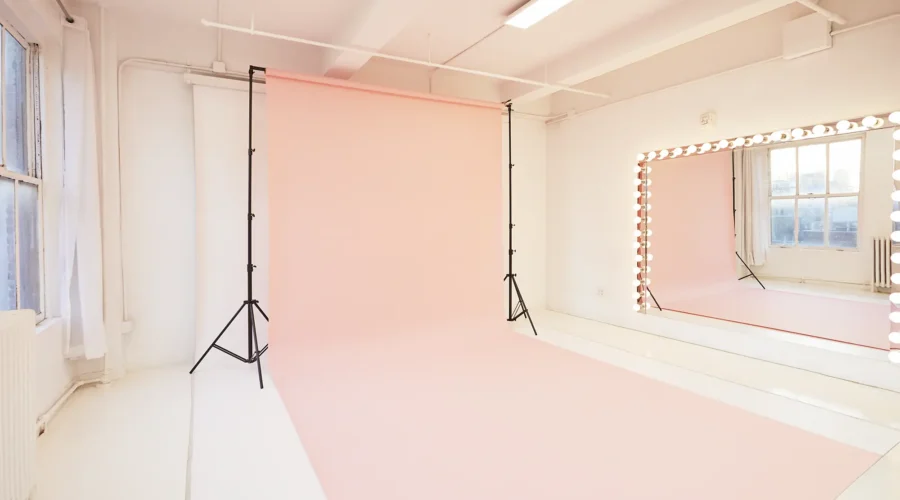
A seamless paper backdrop is a large roll of photography paper used to create a continuous background behind and beneath the subject. Once the paper is mounted and pulled onto the floor, it creates a smooth sweep with no visible corner where the wall meets the floor. This is why paper backgrounds are widely used in studio photography, product photography, fashion shoots, headshots, and commercial work where a clean background matters.
Paper is usually available in solid colors, with white, black, gray, and other shades commonly used for controlled studio photography. Its smooth matte surface also gives photographers a predictable background that does not introduce fabric texture or folds into the frame.
Why Photographers Use Seamless Paper
Paper’s biggest advantage is consistency. A new section of the roll gives you a clean surface for the next shoot, and the material stays relatively flat once properly positioned. There is no need to iron or steam it before every session.
Paper is particularly useful when the background itself should stay visually quiet. Product images, catalog photography, e-commerce images, headshots, beauty photography, and commercial portraits often benefit from a simple background that keeps attention on the subject.
Seamless Paper Creates a Floor-to-Wall Sweep
One useful feature of a paper roll is the ability to create a continuous transition from the vertical background onto the floor. This is often called a sweep or infinity-style background. Instead of showing a visible corner behind the subject, the paper curves gently onto the floor. That makes it useful for full-body portraits, fashion photography, product photography, and commercial images where the floor should visually blend into the background.
The Main Drawback: Paper Is a Consumable Material
Seamless paper is not indestructible. Shoes, furniture, props, equipment, moisture, and frequent movement can dirty or damage the section on the floor. The practical advantage is that you can cut away the damaged portion and pull down a fresh section. That makes paper different from a fabric backdrop. You are accepting some replacement cost in exchange for a consistently clean surface.
What Is a Fabric Backdrop?
A fabric backdrop is a textile background made from materials such as muslin, cotton, polyester, microfiber, or canvas. Fabric backdrops can be plain, colored, textured, printed, or hand-painted, so they cover a much wider range of visual styles than standard seamless paper.
Fabric is especially useful for photographers who travel between locations or need a backdrop that can be folded and carried in a bag. Depending on the material and construction, a fabric backdrop can also be washed, reused for years, and adapted to different types of photography.
Fabric Offers More Texture and Visual Character
Fabric does not always aim to look perfectly flat. Muslin and canvas backdrops can introduce texture, folds, color variation, or painted details that become part of the photograph. That can work particularly well for fashion, editorial, lifestyle, family, newborn, and creative portrait photography. If you want the background to contribute to the mood rather than disappear behind the subject, fabric gives you more options.
Fabric Is Easier to Transport
A fabric backdrop can usually be folded into a carrying bag and transported with other photography equipment. This is a major advantage for location photographers who do not have room for a long paper roll. Fabric can be attached to a backdrop support system using a crossbar, clamps, clips, or another support system.
Wrinkles Are the Main Trade-Off
The biggest problem with fabric is also the result of its portability: it folds. Those folds can become visible in photographs, especially when the backdrop is lit directly or the camera is positioned close to the material. Depending on the fabric, you may need a steamer or iron before a shoot. You may also need to stretch or clamp the backdrop to reduce folds and keep the surface consistent.
Seamless Paper vs. Fabric: How Do They Compare in Real Use?
The material comparison becomes much clearer when you look at the practical issues photographers deal with before, during, and after a shoot. Paper generally wins on surface consistency, while fabric has the advantage in portability and repeated use.
Surface and Image Appearance
Seamless paper provides a smooth, matte surface with very little texture. This makes it easier to create a clean background for commercial photography, product images, e-commerce photography, headshots, and studio portraits. Fabric can provide either a simple background or a visible visual texture. That flexibility helps with portraits and editorial work, but folds, seams, and uneven tension can become distractions if the material isn’t prepared properly. Best choice for a clean, uniform background: seamless paper.
Best choice for texture and visual character:fabric.
Wrinkles and Creases
Paper has a major advantage here. Because it is stored and used as a roll, it does not develop the same type of fold lines as fabric. Fabric can wrinkle during storage and transportation. The severity depends on the material, thickness, how tightly it is folded, and how it is hung. Steaming, ironing, stretching, and careful storage can reduce the problem, but these steps add preparation time. If your priority is getting a background ready quickly, seamless paper is usually easier.
Durability and Reusability
Fabric generally wins for repeated use. A quality cloth backdrop can survive many shoots, and washable materials can be cleaned when necessary. Heavy-duty fabrics are also less vulnerable to the small tears that can end the useful life of a paper section. Paper has a shorter practical lifespan because it can tear, dent, become dirty, or absorb moisture. However, damaged paper does not always mean replacing the entire roll. Photographers can cut off the damaged portion and continue using the roll.
Portability and Transportation
Fabric is much easier to transport. It folds into a compact package and can be carried with other equipment. Paper rolls are awkward because their length and width make them difficult to transport in ordinary vehicles. They also need protection from rain and moisture. This makes seamless paper particularly well suited to a permanent or semi-permanent studio rather than frequent location work.
Cleaning and Maintenance
Fabric is usually easier to maintain over the long term because many fabric backdrops can be washed or spot-cleaned according to the manufacturer’s instructions. You still need to remove wrinkles and store the material properly. Paper cannot be washed. Dirt or damage on the floor section is usually handled by cutting off that section and pulling down fresh paper.
Storage Requirements
Fabric takes up considerably less storage space when folded. It can also be rolled onto a tube if you want to reduce creasing. Paper requires a suitable place for long backdrop rolls. Photographers with several paper colors may need a dedicated storage rack or other support system. This becomes an important consideration for studios with limited storage space.
Cost Over Time
Paper can have a lower initial purchase price, but it is a consumable. Frequent shoots can lead to repeated replacement costs. Fabric may cost more initially, particularly for thick, high-quality, large-format materials, but you can reuse the same backdrop repeatedly. The better financial choice depends on how frequently you shoot, how carefully you handle the backdrop, and whether you value convenience over long-term reuse. We offer multiple photography studios in Manhattan, including daylight and cyc-wall spaces
Which Backdrop Is Better for Different Types of Photography?
The best material changes with the photography job. A photographer shooting products in a controlled studio has different requirements from someone carrying equipment to family sessions across New York City.
| Photography Type | Better Starting Choice | Why |
| Product photography | Seamless paper | Smooth, clean surface |
| E-commerce photography | Seamless paper | Consistent background |
| Headshots | Seamless paper | Clean professional appearance |
| Studio portraits | Paper or fabric | Depends on desired style |
| Fashion photography | Paper or fabric | Paper for clean looks, fabric for texture |
| Editorial photography | Fabric | More visual character |
| Lifestyle photography | Fabric | Flexible and portable |
| Location photography | Fabric | Easier transportation |
| Full-body studio work | Seamless paper | Floor sweep |
| Commercial photography | Seamless paper | Consistency and repeatability |
| Creative portraits | Fabric | Texture and visual variety |
Best Backdrop for Product Photography
Seamless paper is usually the stronger choice for product photography because its smooth surface keeps attention on the product. White paper is especially useful for catalog and e-commerce images that require a clean background. The absence of fabric folds also makes it easier to maintain consistent lighting and produce repeatable images across a product collection.
Best Backdrop for Portrait Photography
Both materials can work well for portraits. Seamless paper is a strong option for professional headshots, beauty photography, fashion portraits, and clean studio portraits. Fabric becomes more useful when you want texture, folds, or a more distinctive visual style. Muslin and canvas can add depth without requiring a complicated set.
Best Backdrop for Fashion and Editorial Photography
There is no universal winner here. Paper works well for clean commercial fashion images, full-body campaigns, and e-commerce work. Fabric can be better for editorial photography where texture and background character are part of the visual concept. The decision should follow the intended look rather than the label “fashion photography.”
Best Backdrop for Location Photography
Fabric has a clear advantage for location work because it can be folded and transported more easily. A photographer can carry a backdrop, stand, clamps, camera, and lighting equipment without needing to accommodate a long paper roll. Paper can still work on location when transportation is available and the shoot requires its specific clean surface.
How Does Lighting Affect Paper and Fabric Backdrops?
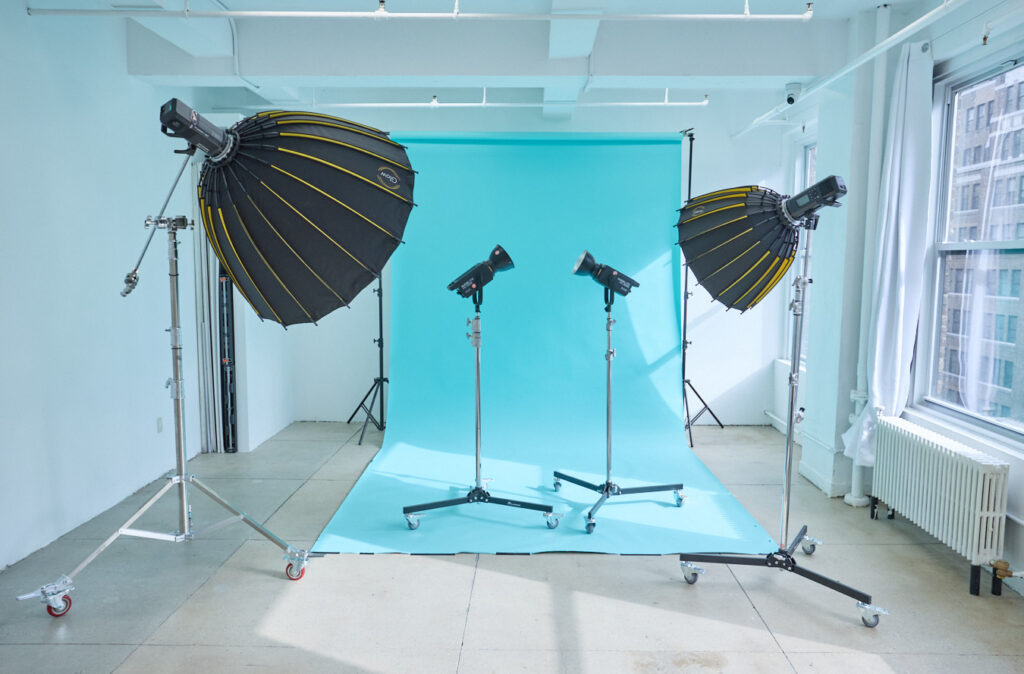
Backdrop material and lighting work together. The same color can look different depending on the light source’s position, intensity, and size, as well as the distance between the subject and background. Seamless paper provides a consistent surface, making background lighting easier to control. You can light the subject separately from the background and adjust exposure to make the background appear brighter, darker, or more neutral.
Fabric requires more attention when folds or texture are visible. Side light can emphasize creases and surface variation. To make fabric look smoother, careful positioning, tension, and lighting can reduce distractions. A useful starting point is to keep enough distance between the subject and backdrop to control unwanted shadows and light spill. The exact distance depends on the size of the subject, lens, lighting setup, and desired look.
What Backdrop Size Should You Choose?
Backdrop size should match the subject, camera position, and shooting style. A backdrop that is too narrow may work for a headshot but fail once the subject moves or the camera pulls back for a full-body image. For paper, common widths include around 53 inches, 86 inches, and 107 inches, although availability varies by manufacturer and product line. Wider rolls are more useful for groups, full-body fashion photography, and larger commercial setups.
For fabric, the same principle applies. A small backdrop may be enough for a seated portrait, while full-body work or group photography needs substantially more width and length.
Before buying, consider:
- Subject size
- Number of people
- Camera distance
- Full-body coverage
- Floor coverage
- Lighting placement
- Available studio space
- Storage capacity
For a studio setup, wider coverage is usually more useful than buying a backdrop that only fits the subject’s upper body.
How Do You Set Up Paper and Fabric Backdrops?
The setup process differs because the materials behave differently.
Setting Up Seamless Paper
A typical paper setup uses a backdrop stand or wall-mounted support system, crossbar, and roll holder. Mount the roll securely, unroll it to the desired length, and position it so the paper curves smoothly onto the floor. Handle the paper carefully during setup, as creases and tears can permanently affect the section being used.
Setting Up Fabric
You can attach fabric to a backdrop stand using a crossbar, clamps, clips, or another support system. The photographer then stretches or positions the material to reduce visible folds. For wrinkle-prone fabrics, steaming the backdrop before the shoot can produce a much cleaner result.
How Should You Store and Maintain Each Backdrop?
Storage directly affects how long a backdrop remains useful. Keep paper rolled and protected from moisture, excessive pressure, and physical damage. Avoid placing heavy objects against the roll because dents can transfer into the paper surface. Fold fabric carefully if compact storage is the priority, but folding can create creases. Rolling fabric onto a tube can reduce folding but requires more storage space.
A simple maintenance approach is:
- Paper: keep dry, roll securely, protect the edges, remove dirty sections.
- Muslin/cotton: wash according to care instructions and steam before use when needed.
- Polyester/microfiber: follow the manufacturer’s cleaning instructions and store without excessive compression.
- Canvas: avoid aggressive cleaning and protect the painted or textured surface.
- Fabric generally: keep it dry and clean before long-term storage.
Should You Buy Both Paper and Fabric Backdrops?
If you shoot different types of work, owning both can make sense. Paper handles clean commercial images, e-commerce photography, headshots, and full-body studio work, while fabric covers portraits, editorial sessions, lifestyle photography, and location shoots. You don’t need a large collection right away. Start with the material that matches the majority of your work and add the second type when a recurring project requires it.
Should You Rent a Studio Instead of Buying More Backdrop Equipment?
If you only need a large studio setup occasionally, renting can make more financial sense than purchasing every backdrop, stand, light, and support system yourself. This is especially relevant for photographers working on commercial campaigns, e-commerce batches, fashion shoots, or client projects that require more space than their normal setup provides.
For photographers in New York City, Love Studios NYC offers multiple photography studios at 545 8th Ave in Manhattan, including daylight and cyc-wall spaces. Love Studios’ offerings include natural-light spaces, continuous lights and strobes, modifiers, and other production equipment, depending on the studio booked.
The studio also offers photography equipment rentals, including lighting and modifiers, so photographers can add production equipment to a booking instead of transporting every piece of gear themselves. That can be particularly useful when you need a controlled environment for a single campaign, product session, portrait shoot, or e-commerce production rather than maintaining a complete studio at home.
How Do You Choose Between Seamless Paper and Fabric?
The simplest way to decide is to match the backdrop to your actual shooting conditions.
Choose seamless paper if you:
- Mostly shoot in a studio.
- Need a smooth, clean background.
- Shoot products or e-commerce images.
- Photograph headshots or commercial portraits.
- Need a floor-to-wall sweep.
- Want minimal preparation before shooting.
- Prefer consistent backgrounds between sessions.
Choose fabric if you:
- Frequently shoot on location.
- Need to transport your backdrop easily.
- Want reusable equipment.
- Shoot portraits, lifestyle, or editorial work.
- Want texture or visual depth.
- Need different patterns or creative backgrounds.
- Have limited storage for long paper rolls.
If you regularly work across both studio and location environments, keeping one paper setup and one portable fabric backdrop may give you the most flexibility without buying unnecessary equipment.
Seamless Paper vs. Fabric Backdrop: Final Verdict
Seamless paper is usually the better choice for controlled studio photography where a clean, smooth, consistent background matters. Fabric is usually better for photographers who value portability, reusability, texture, and location flexibility. Neither material is automatically better for every photographer. Paper saves preparation time but creates more storage and transportation challenges. Fabric is easier to carry and reuse but may require steaming, stretching, and more careful positioning.
For New York photographers who need a professional studio without building a complete setup at home, a rental studio can also bridge the gap.For New York photographers who need a professional studio without building a complete setup at home, Love Studios NYC offers photography services, including daylight studios, cyc-wall studios, seamless paper, and production equipment.
The best choice is the backdrop that gives you the right surface, size, portability, maintenance level, and visual result for the work you actually shoot.
Frequently Asked Questions
Is seamless paper better than fabric for photography?
Seamless paper is generally better for clean studio photography because it provides a smooth, matte, low-texture background with minimal wrinkles. Fabric is more useful when portability, reusability, or texture is important.
Which backdrop is easier to clean?
Fabric is generally easier to clean because many fabric materials can be washed or spot-cleaned according to their care instructions. Seamless paper cannot be washed, so you usually cut away and replace dirty or damaged sections.
Do fabric backdrops show wrinkles in photos?
Yes. Fabric backdrops can develop folds and creases during storage and transportation. Steaming, ironing where appropriate, stretching, and careful lighting can reduce their visibility.
Can seamless paper be reused?
Yes, as long as the paper stays clean and undamaged. Once a section becomes dirty, torn, or heavily marked, you can cut it away and use a fresh section of the roll.
Which backdrop is better for product photography?
Seamless paper is usually the better choice for product photography because its smooth surface provides a clean and consistent background and can create a continuous floor sweep.
Which backdrop is easier to transport?
Fabric is easier to transport because it folds or rolls into a compact package. Seamless paper rolls are longer and harder to carry, especially for location shoots.
What backdrop material do professional photographers use?
Professional photographers use several materials depending on the job. Seamless paper is common for studio portraits, products, fashion, headshots, and commercial photography, while muslin, canvas, polyester, and other fabrics are used for portraits, editorial work, lifestyle photography, and location sessions.
Should beginners start with paper or fabric backdrops?
Beginners should choose based on their main type of photography. If most shoots happen in a home or rented studio, seamless paper is a practical starting point. If the photographer travels to clients or locations, a portable fabric backdrop may be more useful.